
Natural Oil Control for Face: A Gentle 2026 Guide
Sunita shastriTable of Contents
- Why Your Face Gets Oily (and What Actually Helps)
- How to Control Sebum Production Without Stripping Skin
- A Natural Skincare Routine for Oily Skin, Step by Step
- Home Remedies for Oily Skin: What Works and What to Skip
- How to Stop Oily Skin on Face Naturally: Everyday Habits That Help
- When to See a Professional and How to Track Progress
- Conclusion: Building Your Natural Oil Control Plan
- Frequently Asked Questions
Last Updated: October 14, 2026Editorial Team
Why Your Face Gets Oily (and What Actually Helps)
Shiny skin by lunchtime is not a sign that your face is dirty. It usually means your sebaceous glands are working hard, and your current routine may be making things worse.
Natural oil control for face is the practice of reducing excess shine using gentle, plant-based ingredients and habits that support your skin's own balance rather than harsh products that trigger more oil.
Here is the part most guides get wrong: oil is not the enemy. Sebum is your skin's built-in moisturizer. The goal is balance, not elimination.
Common Causes of Excess Facial Oil
Several things push your oil glands into overdrive. Hormones are the biggest driver for most women, especially through perimenopause and menopause. Genetics play a role too. So does your environment, your diet, and, crucially, the products you already use.
A common mistake is over-washing. When you scrub away every trace of oil, your skin panics and produces more. This is why some people feel oilier the harder they try.
- Hormonal shifts around your cycle or midlife
- Over-cleansing with harsh foaming washes
- Skipping moisturizer because you fear adding oil
How to Identify What's Driving Your Shine
Start by watching when your oil appears. If your T-zone is shiny two hours after washing, your cleanser is likely too strong. If you are oily all over and also flaky, your barrier is damaged.
Ask yourself three questions: Does my face feel tight after cleansing? Do I skip moisturizer? Is my oil worse in summer? Your answers point to the cause, and the fix follows from there.
How to Control Sebum Production Without Stripping Skin
You control sebum by supporting your skin barrier, not attacking it. Harsh toners and alcohol-based astringents give instant matte results, then rebound oil within hours.
The American Academy of Dermatology guidance on oily skin makes the same point: harsh products irritate skin and can make oil worse.
But here is what most guides skip: the right way to control sebum depends on which kind of oily skin you have.
Path 1: Sensitive Skin With Shine
If your skin stings, flushes, or reacts easily, your oil may be a stress response to a damaged barrier rather than true overproduction. In this case, actives like salicylic acid and strong clay masks will backfire.
- Cleanse once at night with a sulfate-free, fragrance-free cleanser; rinse with lukewarm water in the morning.
- Use a moisturizer with ceramides, squalane, or aloe to rebuild the barrier before adding anything else.
- Introduce niacinamide at 2-5% only after two weeks of barrier support. Start every other night.
Most sensitive-skin users see less rebound oil within two to three weeks of this approach, because the skin stops overcompensating.
Path 2: Acne-Prone Skin With Clogged Pores
If your shine comes with blackheads, whiteheads, or inflamed bumps, the goal is keeping pores clear while controlling oil. This is where a targeted active earns its place.
- Cleanse gently morning and night. Do not scrub.
- Use salicylic acid (BHA) at 0.5-2% two to three nights a week. BHA is oil-soluble, so it reaches inside the pore where sebum collects.
- Follow with a lightweight, non-comedogenic moisturizer. Skipping it makes oil worse.
If acne is painful, cystic, or scarring, stop self-treating and see a dermatologist. No natural routine replaces medical care for that pattern.
Path 3: Combination Skin (Oily T-Zone, Normal or Dry Cheeks)
Combination skin needs zone-based care, not one product for the whole face. Treating your whole face like an oily T-zone will leave your cheeks tight and flaky.
- Cleanse with a mild gel or cream cleanser. Avoid foaming formulas that strip the cheeks.
- Apply a lightweight lotion to the full face, then a slightly richer cream only on dry areas.
- Use a BHA or clay mask only on the T-zone, not the cheeks.
Ingredients That Help Balance Sebum
Some plant ingredients genuinely help balance oil. Others just sound good on a label. Here is what we look for:
- Niacinamide supports the skin barrier and may reduce oil over time
- Salicylic acid clears clogged pores and helps with blackheads
- Neem has long been used in Ayurvedic tradition for oily, blemish-prone skin
- Turmeric brightens and clarifies without drying
A word of caution: natural oils like coconut and olive oil can clog pores on acne-prone skin. Jojoba and castor oil suit some people, but test first.
A Natural Skincare Routine for Oily Skin, Step by Step
A natural skincare routine for oily skin has four steps, morning and night. It takes about five minutes. The order matters more than the number of products.
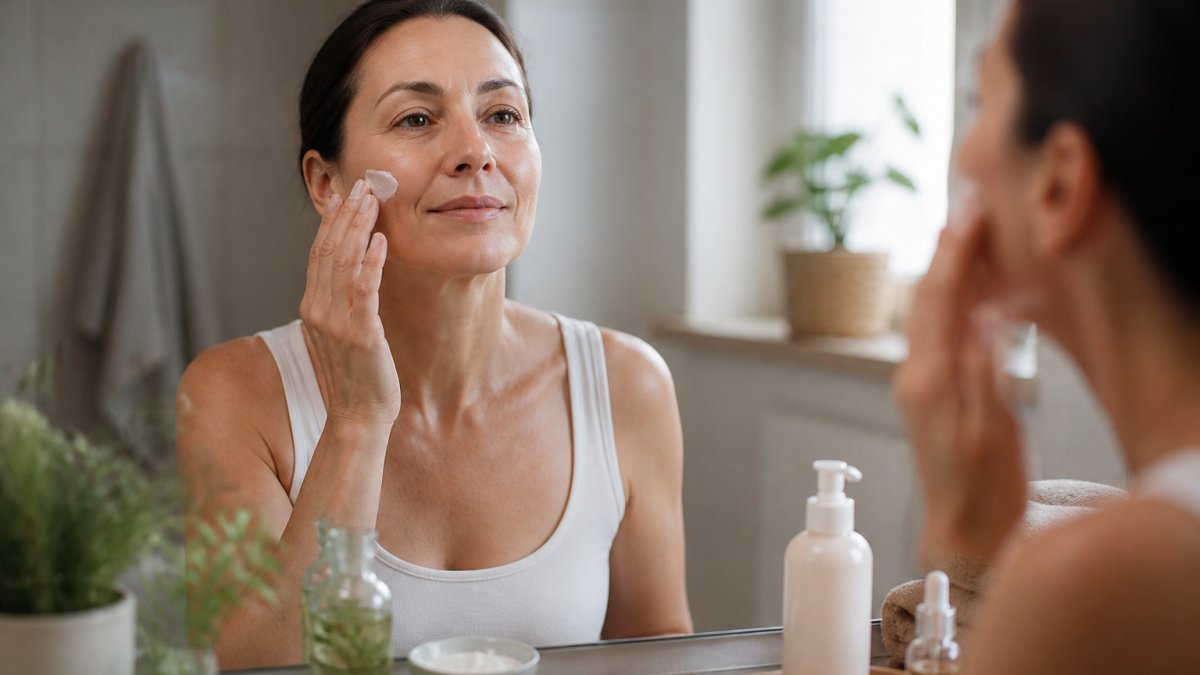
- Cleanse gently. Use lukewarm water and a sulfate-free cleanser. Our Turmeric Foaming Cleanser lifts excess oil without leaving skin tight.
- Tone lightly. Choose an alcohol-free toner to refresh skin and prep it for moisture.
- Moisturize. Yes, even oily skin needs this. A lightweight moisturizer like our Turmeric Face Lotion hydrates without residue.
- Protect. In the morning, finish with a non-greasy sunscreen.
Twice a week, swap your cleanser for an exfoliating bar. Our Neem Exfoliating Bar Soap uses neem, charcoal, and clove to clear impurities and absorb surface oil.

Home Remedies for Oily Skin: What Works and What to Skip
Some home remedies for oily skin help, and some cause harm. The trick is knowing which is which. Below, we separate ingredients with real evidence behind them from traditional favorites that mainly offer soothing or cosmetic benefits, and we set honest expectations for how long results take.
Remedies With Reasonable Evidence
These ingredients have research or long clinical use supporting their role in oil control and pore care:
- Niacinamide (vitamin B3): Topical niacinamide at 2-5% has been studied for reducing sebum production and improving barrier function. Expect gradual change over four to eight weeks, not overnight matte skin.
- Green tea extract: Contains EGCG, an antioxidant studied for calming inflammation and reducing sebum in acne-prone skin. A cooled green tea rinse or a green-tea-based toner is a low-risk option.
- Salicylic acid from willow bark: A BHA that clears pores. Willow bark extract is a gentler natural source, though concentrations vary by product.
- Oatmeal: Colloidal oatmeal is recognized for soothing irritated skin (pubmed.ncbi.nlm.nih.gov). It will not reduce oil production, but it calms the barrier that harsh routines damage.
Traditional Remedies Worth Trying (With Modest Expectations)
These have long histories in Ayurvedic and folk skincare. They are generally safe for most people but have less direct evidence for oil reduction:
- Multani mitti (fuller's earth): A traditional clay mask that pulls surface oil without stripping. Good for a weekly refresh.
- Raw honey: Antibacterial and soothing. Best as a gentle mask, not an oil reducer.
- Plain yogurt: Contains lactic acid, a mild exfoliant. Helps smooth texture over time.
- Cucumber: Cools and refreshes without drying. Mostly a comfort ingredient.
What to Skip
- Lemon juice: Too acidic for facial skin. It disrupts the acid mantle and often causes irritation, redness, and photosensitivity.
- Baking soda: Alkaline and abrasive. It strips the barrier and triggers rebound oil.
- Rubbing alcohol: Defats the skin aggressively and damages the barrier.
- Toothpaste on spots: Irritating and not formulated for skin.
Realistic Timelines for Natural Remedies
Natural does not mean instant. Here is what most people actually experience:
- Days 1-3: Less tightness if you have stopped over-cleansing. Shine may not change yet.
- Weeks 1-2: Skin feels calmer. Clay masks give temporary matte results that last a few hours.
- Weeks 4-8: Niacinamide and consistent gentle care may start to show steadier oil through the day.
- Weeks 8-12: Meaningful change in oiliness and pore appearance for most consistent users.
If nothing changes after twelve weeks of a consistent, gentle routine, the cause may be hormonal or medical. That is a signal to see a professional, not to add more remedies.
Safe Dilution and Application of Essential Oils
Essential oils are potent and should never go on skin neat. A safe rule is one drop of essential oil to one teaspoon of carrier oil, such as jojoba or almond oil.
Lavender, geranium, and rosemary oils are popular for oily and combination skin. Always patch test on your inner arm for 24 hours first. If you feel stinging, burning, or itching, wash it off and stop.
How to Stop Oily Skin on Face Naturally: Everyday Habits That Help
Habits shape oil more than any single product. To stop oily skin on your face naturally, look at your day, not just your shelf. Small changes add up faster than you would expect.
- Do not touch your face during the day
- Blot with soft tissue instead of powdering over shine
- Wash your pillowcases twice a week
- Drink water steadily through the day
Diet matters for some women more than others. Anti-inflammatory foods, including leafy greens, berries, and omega-3 sources, may help calm oil and blemishes. There is no single food that fixes oily skin, so treat diet as support, not a cure.
When to See a Professional and How to Track Progress
See a dermatologist if your oil comes with painful cysts, sudden changes, or no improvement after three months of a consistent routine. Persistent acne that scars is another reason to get help.
Tracking progress keeps you honest. Take a photo in the same light every Sunday. Note how your skin feels two hours after cleansing. If shine drops and tightness fades, your routine is working.
- Week 1-2: less tightness after cleansing
- Week 3-4: fewer clogged pores and blackheads
- Week 6-8: steadier oil through the day
- Week 12: clearer, more balanced skin texture
Conclusion: Building Your Natural Oil Control Plan
Oily skin responds best to consistency and gentleness, not force. Build a simple routine, keep it steady for eight to twelve weeks, and adjust one thing at a time.
At PIYA BEAUTY, we make that routine easier with handcrafted, Ayurvedic-inspired formulas. Our Turmeric Foaming Cleanser is sulfate-free and gentle enough for daily use. Our Neem Exfoliating Bar Soap purifies oily, blemish-prone skin.

Frequently Asked Questions
What causes oily skin?
Oily skin usually comes from sebum production that is influenced by genetics, hormones, and environment. Heat and humidity can increase shine, and harsh cleansing can strip the skin, leading to rebound oil. Identifying your triggers, such as stress, diet, or over-washing, helps you target natural oil control more effectively. A gentle routine that supports skin balance often works better than trying to dry out your face.
How can I control oily skin naturally?
Start with a sulfate-free cleanser, use a lightweight moisturizer, and avoid over-cleansing. Ingredients like niacinamide and salicylic acid can help regulate sebum, while jojoba oil may balance without clogging pores. A natural skincare routine for oily skin should include gentle exfoliation once or twice a week. Patch test new products and give your skin a few weeks to adjust before judging results.
How do I build a natural skincare routine for oily skin?
Begin with a gentle foaming cleanser morning and night. Follow with a lightweight moisturizer that contains hydrating ingredients like aloe vera. Exfoliate with a mild scrub or salicylic acid one to two times weekly. Always finish with sunscreen in the morning. Adjust based on how your skin feels, and keep the routine simple to avoid irritation.
Can ice reduce oily skin?
Ice can temporarily constrict blood vessels and reduce puffiness, but it does not control sebum production long-term. Brief cold compresses may calm inflammation and make pores appear smaller for a short time. For lasting natural oil control, focus on gentle cleansing, balancing ingredients, and consistent moisturizing rather than relying on ice as a primary solution.